The Importance of GMP and Non-GMP Data Infrastructure
and Data Management in Pharmaceutical Compliance
Ensuring data integrity from the shop floor to decision-making: compliant with GMP requirements, secure, and inspection-ready.
In the pharmaceutical industry, GMP and Non-GMP data infrastructure and data management, combined with the right software architecture, play an essential role in guaranteeing product quality and patient safety.
GMP (Good Manufacturing Practices) and Non-GMP environments call for differentiated yet complementary approaches to ensure the traceability, security, and reliability of information throughout the drug lifecycle.
At Efor, we support pharmaceutical companies in the design, management, and evolution of their infrastructure, incorporating careful thinking around software architecture (modularity, scalability, security by design) and the deployment of engineering solutions and validated computerized systems that meet the requirements of authorities such as the Food and Drug Administration (FDA) and the European Medicines Agency (EMA).
These requirements now sit within a broader digital context, marked by the rise of cloud computing, OT/IT connectivity, and the need to strengthen cybersecurity against growing risks to data and critical operations.
Principles of a Pharmaceutical Data Infrastructure
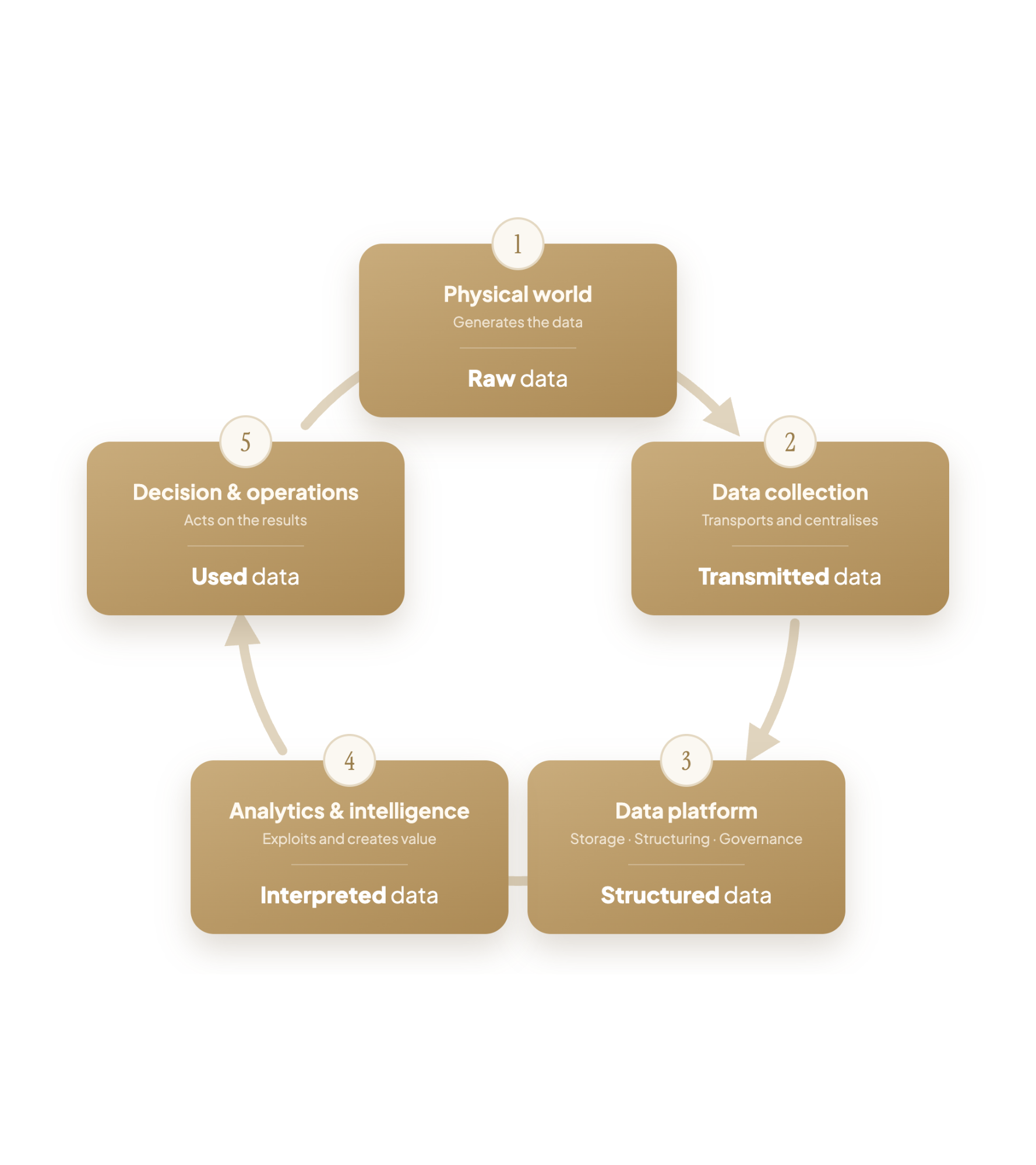
In a pharmaceutical environment, data infrastructure must be designed as a continuous flow, from data generation at the equipment level through to its use in decision-making processes.
This flow is organized across several layers: the physical world (Operational Technology), data collection and contextualization, data platforms (GMP and Non-GMP), analytics layers, and finally business operations.
GMP compliance doesn’t apply only to systems — it applies to the entire data lifecycle, depending on how the data is used and its impact on product quality.
As a result, a single infrastructure can include both GMP and Non-GMP environments, differentiated not solely by technology but by the level of risk associated with the data being processed.
Designing Compliant and Secure Infrastructure
GMP data is a pillar of pharmaceutical quality. Its integrity, availability, and confidentiality — together with compliance with the ALCOA+ principles (Attributable, Legible, Contemporaneous, Original, Accurate, Complete, Consistent, Enduring, Available) — are what demonstrate compliance during audits and regulatory inspections.
Today, compliance is no longer limited to software validation; it now also encompasses resilience, cybersecurity, technology risk management, and the software quality underpinning applications.
Infrastructure must be built to:
Design compliant software architecture
Validate computerized systems
Ensure traceability and audit trails
Ensure access control
Secure data
Deploy a robust backup policy
Master hosting models
Segment industrial and application networks
Segment environments
Ensure infrastructure and data resilience
In practice, this means:
- redundant architecture (mirrored servers, RAID systems, distributed storage, etc.)
- business continuity and disaster recovery plans
- regular testing of these measures (restoration simulations, crisis exercises)
- automated, externalized backups
- documentation and traceability to demonstrate during inspections that GMP quality is maintained even in a crisis situation
-
Implement review procedures
These principles help meet regulatory requirements while optimizing manufacturing and control processes. Cybersecurity is thus becoming a pillar of pharmaceutical quality, on par with software validation or documentary traceability.
Differentiating GMP and Non-GMP Data Management
Effective data management relies on a clear distinction between GMP and Non-GMP environments:
GMP Data
Relates to manufacturing, quality control, and batch release activities. It must comply with international guidelines, rely on robust SOPs, ensure ALCOA+ compliance, and be subject to documented control
Non-GMP Data
Covers research, development, document management, and various support functions, and can benefit from more agile environments — validated cloud, virtualized servers, analytics platforms — provided a controlled, documented deployment cycle is in place
A well-designed infrastructure should allow for the logical separation of data flows while maintaining overall consistency, through appropriate procedures and software.
Logical and physical separation — achieved through segmentation and isolation (environment segmentation, VLANs, DMZs) — ensures overall consistency while allowing operational flexibility, without compromising compliance or traceability.
This controlled deployment cycle makes it possible to validate application changes before they go into production, document testing, and preserve regulatory traceability, all while reducing project delivery timelines.
As a result, the distinction between GMP and Non-GMP no longer rests solely on the technical environment, but on risk management and change control.
Scalability and Performance: New Levers for Compliance
Modern pharmaceutical infrastructure must combine regulatory requirements with technological agility.
With the rise in data volumes (IoT, sensors, historical records), software and hardware architecture must be able to scale infrastructure capacity without losing control.
Modular, scalable resources: dynamically adjust capacity while maintaining the IQ/OQ/PQ qualification cycle
Controlled orchestration: audit and validate every change, ensure integrity and traceability, and prepare the documentation required for each deployment
Centralized monitoring: oversee performance, access, and security alerts, and generate reports for periodic reviews
Hybrid models (on-premises infrastructure, cloud, mixed solutions) allow organizations to fine-tune agility without losing regulatory grounding (security, environment segmentation, hosting provider compliance).
That said, they require strong governance, rigorous documentation practices, and ongoing team training to maintain compliance over time.
Traceability, Audit, and Regulatory Compliance
Health authorities require full transparency into how data is created, modified, and retained (the data lifecycle).
A compliant GMP infrastructure includes:
Standardized Procedures (SOPs)
Audit trail
Documented periodic reviews
Structured application of the ALCOA+ principles
Rigorous documentation practices
These measures ensure risk is kept under control and build confidence during internal or regulatory audits.
These requirements now also extend to infrastructure security, change management, and continuous cybersecurity monitoring of GMP environments.
Focus on Qualification and Operational Performance
System qualification (IQ: Installation Qualification, OQ: Operational Qualification, PQ: Performance Qualification) is required for any system affecting GMP data and traceability. It relies on applying international standards (GAMP 5, Annex 11, 21 CFR Part 11, etc.), formalizing requirements and tests, and maintaining documented archives.
An Integrated Approach: Data Quality, Governance, and Performance
Building GMP/Non-GMP infrastructure and software architecture requires an overarching strategic approach built around:
- a deep understanding of business processes
- mastery and application of regulations
- integration of cybersecurity requirements (encryption, monitoring, DLP, incident response)
- documentation management and regular reviews
- the ability to ensure compliance in an evolving environment, combining hybrid models with risk control
Efor Engineering teams deploy solutions that guarantee data quality, business continuity, and regulatory compliance, all while optimizing operational performance.
Resources and References
To learn more about data management best practices, see the FDA’s official guidance – Data Integrity and Compliance With CGMP.